Authorized retailer · USA Authorized Retailer 1200 mg blend · 60 capsules a bottle Supports healthy muscle Lot SOD-26/SO-7263

SodaPeak blog

What Vegetarian Actually Means on a Supplement Label

The ingredient that breaks a vegetarian claim is almost never on the front of the box. It is the shell the powder is sitting in.

Start here

Vegetarian is not a regulated word

An allergen statement on a US food or supplement label is an enforced thing. The major allergens have to be declared, in set words, and a manufacturer who gets it wrong has a recall on their hands.

“Vegetarian” is not that. Neither is “vegan”. There is no federal definition of either term for a supplement label, no agency that issues a vegetarian licence, and no standard the word has to be measured against before it is printed. A carrot drawn inside a green circle is artwork. It looks like a certification mark because certification marks look like that, which is the entire reason the design exists.

Some seals do sit behind a real private scheme with an audit and a registration number, and those are worth whatever that scheme checks. Most seals in this category are not that. They are a shape a designer placed on a box.

So the word on the front is not the evidence. The evidence is the ingredient list on the back, which has rules behind it, and reading it takes about half a minute.

Three checks

The three places a supplement fails the claim

In roughly this order of frequency. The first one accounts for most of the products that carry a seal they should not.

The capsule shell

The commonest failure by a distance, and the one nobody looks at. A two-piece capsule is made either of gelatin, which is animal collagen boiled out of hide and bone, or of HPMC — hypromellose, a plant-derived cellulose. Both look identical once filled. Only the label distinguishes them, and it does so on the other-ingredients line rather than anywhere prominent.

Glandular and organ ingredients

Dried animal tissue, usually named by the organ rather than the animal: orchic, liver, adrenal, thymus. These sit inside the panel itself, among the botanicals, and their names do not announce what they are. A reader who does not already know what a word means will scan straight past it, which is exactly what happens.

Animal-derived excipients

The quieter category. Magnesium stearate and stearic acid can be made from plant or animal fat and the label almost never says which. Some actives are supplied gelatin-coated for stability. Where a label is silent, it is silent: the honest answer is that you cannot tell from the artwork and would have to ask the manufacturer.

The check

How to check a label in thirty seconds

Here is the whole check, and it is faster than reading the front of the box.

Read the other-ingredients line last word first. That line is printed in descending order by weight, and the capsule shell is usually the final item on it, because the shell weighs little compared with what is inside it. So the answer to the commonest failure is sitting at the end of one sentence. If that last item says “Gelatin Capsule”, the product is not vegetarian and nothing on the front of the box changes that. If it says “HPMC”, “Hypromellose”, “Vegetable Capsule” or “Vegetarian Capsule”, the shell is fine.

Then read the panel itself for tissue. Scan the ingredient names for anything that is an organ rather than a plant. If a name has no species in brackets after it and no plant part, that is the flag to stop on.

Then accept what the label cannot tell you. The origin of a stearate is usually unpublished. Note it as unknown rather than deciding it either way.

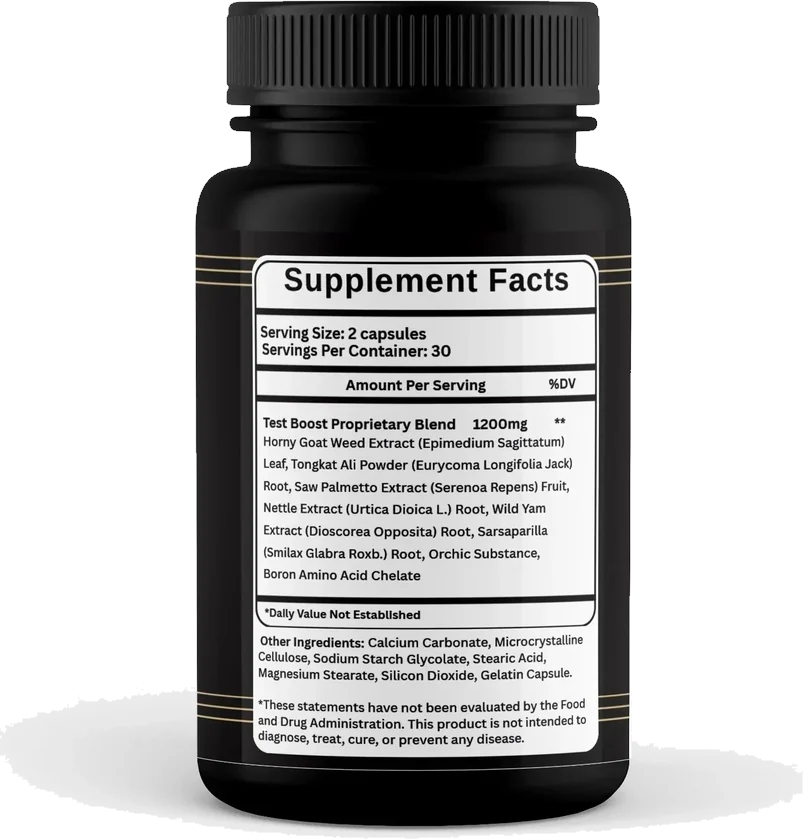
The SodaPeak Supplement Facts panel, with the other-ingredients line beneath it
The other-ingredients line runs along the bottom of the panel. Read it backwards and the shell is the first thing you meet.

Applied to this label

A worked example: a carrot seal and a gelatin capsule

Both failure points, on one label

A vegetarian seal appears in the packaging artwork supplied with this product. The label itself says otherwise, twice over. The Other Ingredients line ends “Gelatin Capsule”, and gelatin is made from animal collagen. The blend itself contains Orchic Substance, which is glandular tissue of animal origin. Neither of those is a borderline case, and neither is hidden: both are printed on the panel in plain sight.

Run the check on it. The other-ingredients line reads: Calcium Carbonate, Microcrystalline Cellulose, Sodium Starch Glycolate, Stearic Acid, Magnesium Stearate, Silicon Dioxide, Gelatin Capsule. Take the last item first and it is Gelatin Capsule. That is the commonest failure, found in one word, before you have read anything else.

Then scan the panel for tissue, and the seventh of the eight names is Orchic Substance — no species in brackets, no plant part, because it is not a plant. That is the second failure, and it is inside the blend rather than underneath it.

If you avoid animal-derived ingredients, this product is not for you, and the seal on the box is wrong. The label wins, and on this point the label is unusually easy to read.

The vegetarian carrot seal from the SodaPeak packaging artwork
The seal as supplied with the packaging. It is the one mark on this box we would tell you to ignore outright.

The unfamiliar word

The second problem: a glandular ingredient

The gelatin shell is the obvious half. Orchic substance is the half that needs a sentence, because it is a word most people have never met.

It is a glandular ingredient: animal tissue, dried and powdered, and in this case testicular tissue, which is what the word means. It is not obscure to the people who formulate these products. It is entirely obscure to almost everyone who buys them.

This label names it and no more. It does not name the animal, the part beyond the word itself, the process used to dry it or the amount present. That last omission is the general one on this product: the panel declares a 1200 mg blend total and no individual figure against any of its eight members.

What the printed order does tell you is position. Orchic substance is seventh of eight, which by the panel’s own descending order means there is more of it than of the boron beneath it. For a reader whose reason for checking the list is that they avoid animal ingredients, that is not a trace-level footnote. It is an ingredient.

Be precise

A labelling failure, not a safety one

It is worth being precise about what has gone wrong here, because the two things get run together and they are not the same.

Gelatin capsules are completely ordinary. They are the default shell across the whole supplement industry, they have been used for a century, and there is nothing about one that should worry anybody who does not avoid animal products on principle. A gelatin capsule is not a defect, a shortcut or a warning sign. The same goes for a glandular ingredient: it is a long-standing category, and the label prints its name in the open on the panel where it belongs.

What is not ordinary is the seal. The failure here is a labelling failure — a claim in the artwork that the ingredient list underneath contradicts, twice, in plain sight. Nobody is harmed by it except the reader who trusted the front of the box instead of the back.

That distinction matters because it changes who should care. If you eat animal products, this finding costs you nothing at all and you can stop reading here. If you do not, it is decisive, and it is the single most useful thing anyone can tell you about this product.
Four steps

What to do if you already bought one

  1. Check the panel you actually received

    Artwork changes between batches and listings lag behind. Read the container in your hand rather than the picture that sold it to you, and photograph the panel before anything goes in the bin.

  2. Decide on the ingredients, not the seal

    If the shell is gelatin or the blend contains tissue, the product is not vegetarian whatever the front says. That is the finding, and no further research will move it.

  3. Contact the seller with the specific line

    Quote the other-ingredients line and the ingredient name, and say which one is the problem. A specific complaint about a printed word is far harder to deflect than a general one about a seal.

  4. Read the return terms before you post anything

    Whatever window applies to your order is printed on the listing you bought from. Screenshot it with the date on screen, keep the order email, and use tracked postage if you do send the bottle back.

Summary

The thirty-second method

Three moves, half a minute, and it works on any capsule or tablet in any category. One. Find the other-ingredients line and read it backwards; the shell is usually the last item and it is the commonest failure. Two. Scan the panel itself for a name that is an organ rather than a plant, which you spot by the absence of a species and a plant part. Three. Treat stearate origin as unpublished unless the label says otherwise, and ask the manufacturer if it matters to you.

Nothing in that involves the seal, and that is deliberate. A seal is the claim. The ingredient list is the evidence, and on a label like this one the evidence is not hiding.

References

Sources

  1. NIH Office of Dietary Supplements. Dietary Supplements: What You Need to Know. ods.od.nih.gov. Accessed September 22, 2026.
  2. U.S. Food and Drug Administration. Information for Consumers on Using Dietary Supplements. www.fda.gov. Accessed September 22, 2026.
  3. National Center for Complementary and Integrative Health. Using Dietary Supplements Wisely. www.nccih.nih.gov. Accessed September 22, 2026.
  4. NIH Office of Dietary Supplements. Botanical Dietary Supplements: Background Information. ods.od.nih.gov. Accessed September 22, 2026.

Order SodaPeak from the official page

Capsules, 60 capsules a bottle, 30 servings at the panel’s two-capsule serving. Prices and the money-back window are printed on the listing, and the order desk is listed in the footer. No per-ingredient amount is published, and you should know that before you pay.

Price and money-back window on the listing · ships from inside the US · order desk in the footer

SodaPeak — 1200 mg blend, 60 capsules Money-back window on the listing · price shown at checkout
Order now