Horny goat weed extract
First on the panel, so the largest share of the blend. No federal consumer page exists for it, and therefore no published summary of its effects or interactions.
Official product information
What is published about the safety of these eight ingredients, what is not, and why the difference matters more here than on most labels.
Written and reviewed by the SodaPeak Editorial Desk · Last updated September 22, 2026
Quick answer
No side effects are published for SodaPeak itself. Of its eight ingredients, exactly one — saw palmetto — has a federal consumer page. NCCIH says it is well tolerated, that adverse effects are mild and infrequent and may include digestive symptoms, dizziness and headache, that it does not appear to affect PSA readings, and that it may be unsafe during pregnancy or while breastfeeding. NCCIH’s BPH digest adds that nettle is generally well tolerated, may produce mild gastrointestinal effects, and contains tannins that can reduce the effectiveness of an iron supplement. For five of the eight no federal page exists — an absence of a summary, not evidence of harm.
The honest section
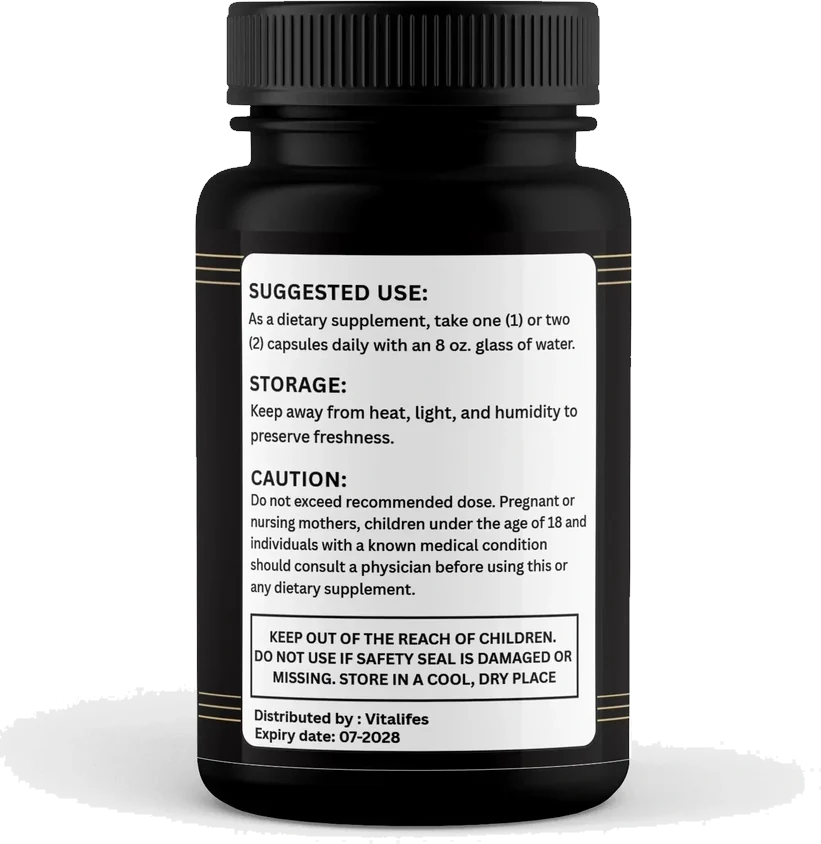
No side effects are published for SodaPeak itself. Not a list, not a leaflet, not a note on the bottle beyond the standard caution. The label prints a suggested use, a storage line, a caution naming three groups, a safety-seal warning and the FDA footnote. That is the whole of it.
So a safety page here has to be built out of the ingredients instead, and that is where the real problem starts. Of the eight on the Supplement Facts panel, exactly one has a federal consumer page a reader can open. NCCIH’s Herbs at a Glance index covers about fifty-six herbs; of this formula’s botanicals, only saw palmetto is in it. That is checkable rather than an opinion, and it sets the limit on everything below: for most of what is in this bottle there is no plain-language federal summary to read out to you.
What can be checked
| Ingredient | Federal consumer page? |
|---|---|
| Horny goat weed extract (leaf) | No — not in NCCIH’s Herbs at a Glance index |
| Tongkat ali powder (root) | No — not indexed either |
| Saw palmetto extract (fruit) | Yes — NCCIH publishes a full page |
| Nettle extract (root) | In NCCIH’s research digest on benign prostatic hyperplasia |
| Wild yam extract (root) | No |
| Sarsaparilla (root) | No |
| Orchic substance | No |
| Boron amino acid chelate | Yes — the Office of Dietary Supplements publishes a boron page |
The absence of a federal page is the absence of a summary, not evidence of harm. Five of these have no page because nobody in the federal consumer-information system has written one — a statement about the documentation, not about the substance. It does not mean they are dangerous. It does not mean they are safe either.
The one with a page
This is the one ingredient you can look up, so here is what NCCIH publishes about how it is tolerated, quoted rather than paraphrased:
Four sentences, and deliberately all of them. We will not extend them into a statement about this formula: saw palmetto is one of eight ingredients here in a proportion nobody has published, and a tolerability finding about a standardised extract is not a finding about an unmeasured share of a blend.
Carry the PSA line to a clinician anyway: NCCIH’s wording is that saw palmetto does not appear to affect those readings, but whoever orders the test should still be told what you take.
The research digest
Nettle is not in the Herbs at a Glance index, but NCCIH’s research digest on benign prostatic hyperplasia covers it, and that digest is where these three lines come from.
The third is the most useful sentence on this page, because it is the only specific published interaction anywhere in this formula. If you take iron, raise it with a pharmacist by name.
Two boundaries on that digest. It is about the root and about urinary symptoms — which is what this label specifies — not about muscle. And it describes nettle studied on its own, not as an unlabelled share of a 1200 mg blend of eight ingredients. The longer read →
The gap
Horny goat weed, tongkat ali, wild yam, sarsaparilla and orchic substance.
First on the panel, so the largest share of the blend. No federal consumer page exists for it, and therefore no published summary of its effects or interactions.
Second on the panel, and the only botanical the label calls a powder rather than an extract. No federal consumer page either.
The species named is the Chinese yam rather than the Mexican one often sold under the same English name. No federal consumer page covers it.
A traditional tonic root, named with a species and with no modern federal consumer page behind it.
Animal glandular tissue. The label names neither animal nor process, and no federal consumer page covers it.
For those five, no federal page exists, and this site cites nothing for them. We will not reach for a retailer’s monograph to fill the space.
And the point that travels with it: absence of a page is absence of a summary, not evidence of harm. Plenty of substances with long traditional use have never been written up in a federal consumer format. It does mean that the published material will not tell you whether this formula is safe alongside something else you take.
The only mineral
Boron is the eighth ingredient and the only mineral. NIH’s Office of Dietary Supplements describes it as “a mineral in many foods” and is direct about the state of knowledge: “Experts haven’t set a recommended amount of boron”, and “scientists are studying boron to understand whether it affects health”. That page says nothing at all about muscle, performance or hormones.
It does publish one number that matters here: the upper limit for adults is 20 mg a day, from all sources combined.
You cannot check this product against it. No amount of boron is published for SodaPeak. The panel prints one total — 1200 mg for the whole blend — shared by eight ingredients in undisclosed proportions. Boron is printed last, so under the descending-order rule it is the smallest share, and that is the entire extent of what the label lets you conclude.
The consequence is narrow and real: if you already take a boron-containing supplement, you cannot add this to it and check the total, because one of the two numbers does not exist anywhere.
Context
Two federal bodies publish warnings about the category this product is sold into.
Its exercise and athletic performance page states that the FDA warns some products marketed as dietary supplements to improve exercise and athletic performance “might contain inappropriate, unlabeled, or unlawful stimulants, steroids, hormone-like ingredients, controlled substances, prescription medications, or unapproved drugs”, and that “using these tainted products can cause health problems”.
Its guidance on using dietary supplements wisely makes a similar point about products marketed for weight loss, sexual enhancement and bodybuilding: they “may contain prescription drugs not allowed in dietary supplements or other ingredients not listed on the label”, and “some of these ingredients may be unsafe”. It adds that “natural” does not always mean “safe”, which is worth holding against the natural-ingredients seal on this packaging.
Neither warning names this product and we are not implying either does. What would settle it is a laboratory report for the batch in your hand, and none has been published. Lot SOD-26/SO-7263 and certificate SOD-7263-26-SO are reference codes with no document behind them. What the codes are and are not →
A sequence
Six steps, in order. The first one is the one people skip.
Before you try to work out whether the capsule was responsible. That question is easier to answer from a standing start.
What you noticed, the date, which end of the label’s range you were on, and anything else you take daily.
The lot number, the expiry date and the panel are the only identifying information that exists for what you took.
Take the bottle or a photograph of the panel. Six of the eight ingredients have no published interaction summary, so the panel is more use than a description.
The line is +1 (302) 200-3480. A seller cannot act on a pattern nobody reports.
The FDA runs a consumer reporting route for problems with dietary supplements, and a report is how a problem with a product reaches somebody’s desk.
“Do not exceed recommended dose.” With eight ingredients in undisclosed proportions, taking more than the label says is a guess stacked on a guess. The same panel adds that pregnant or nursing mothers, children under 18 and individuals with a known medical condition should consult a physician first.
Questions
For most healthy adults the named ingredients are common in supplements. The honest problem is that only one of the eight has a federal consumer page, so for the other seven there is no plain-language safety summary to read. The bottle’s own caution names pregnant and nursing mothers, children under 18 and anyone with a known medical condition.
None are published for this product. NCCIH says saw palmetto is well tolerated and that adverse effects are mild and infrequent, and may include digestive symptoms, dizziness and headache; it says nettle may produce mild gastrointestinal effects. Anything beyond that is worth reporting to the order desk and to your own clinician.
Possibly, and the label gives you little to work with. NCCIH notes that nettle contains tannins that can reduce the effectiveness of an iron supplement. Beyond that, six of the eight ingredients have no federal consumer page, which means no published interaction summary. Show the eight-ingredient list to a pharmacist before your first capsule.
NIH’s Office of Dietary Supplements states that the FDA warns some products marketed as supplements to improve exercise and athletic performance might contain inappropriate, unlabeled or unlawful stimulants, steroids, hormone-like ingredients, controlled substances, prescription medications or unapproved drugs. The FDA also maintains a public notification list for sexual enhancement and energy products. No laboratory report has been published for this product, so neither list can be checked against it.
No. The bottle prints its own answer: “Do not exceed recommended dose.” With eight ingredients in unknown proportions, taking more is not a controlled experiment, it is a guess on top of a guess.
References
Capsules, 60 capsules a bottle, 30 servings at the panel’s two-capsule serving. Prices and the money-back window are on the listing. Order desk +1 (302) 200-3480.
Price and money-back window on the listing · ships from inside the US · order desk +1 (302) 200-3480