Free reading
The Muscle Support Supplement Guide
What “muscle support” and “test boost” mean as shelf categories in the United States, which ingredients keep appearing, and what any of these products is allowed to say about itself.
Written and reviewed by the SodaPeak Editorial Desk · Last updated September 22, 2026
Quick answer
Muscle support and test boost are marketing categories, not regulated ones, and two products sold under both can share no ingredient. A US supplement may make structure/function claims — it supports, it helps maintain — and must carry the FDA footnote beside them; it may not claim to treat a disease or change a hormone level, and no supplement is FDA approved. Most panels here print a blend total rather than per-ingredient amounts, and most carry “Daily Value not established”. For three of the category’s best-known ingredients — Tribulus terrestris, DHEA and deer antler velvet — NIH’s Office of Dietary Supplements finds no scientific support for improving exercise or athletic performance.
The category
What the muscle support shelf actually is
Walk along the shelf this product sits on and two phrases appear more than any others: muscle support and test boost. Neither is a regulated term. Neither has a definition you could look up. Both describe a shelf rather than a formula.
What the products share is mostly shape. A capsule, sixty or ninety to an opaque bottle, a blend of botanical extracts with a mineral or an animal-derived ingredient behind them, and a front panel of short abstract nouns. SodaPeak is an ordinary example: 60 capsules, a two-capsule serving, and a blend the label calls a Test Boost Proprietary Blend.
What they do not share is content. Two bottles beside each other, both sold as muscle support, can have no ingredient in common. So the useful question is what this panel declares, and what the law lets it say about that.
Language
Why “muscle support” and “test boost” are vague on purpose
The vagueness is not laziness. It is a legal requirement wearing marketing clothes.
A supplement sold in the United States may make structure/function claims: statements that an ingredient supports, helps maintain or contributes to a normal function of the body. It may not say a product treats, prevents or cures a disease, because that is a drug claim, and it may not claim to change a hormone level. So the verbs go soft. A label says supports healthy muscle rather than builds muscle, because the second would move the product into a category it is not licensed for.
A blend name is the same move one level down. A name is not a claim, so a phrase like “test boost” tells you who a product is aimed at rather than what it does.
The reading rule is short. Look at the verb. Supports, helps maintain and contributes to are permitted, and therefore mean little on their own. Increases, restores, raises, treats and reverses are not permitted on a supplement label at all.
The formulas
The ingredients that keep appearing
Ten names you will meet again and again, in general terms.
A flowering plant of the genus Epimedium. Not in NCCIH’s Herbs at a Glance index, so no federal summary exists.
A Southeast Asian shrub-tree, sold as root powder or as extract. A powder is ground root; an extract is a concentrate.
NCCIH describes a small tree growing to 6 to 10 feet, promoted for urinary symptoms rather than for muscle.
Stinging nettle. Root and leaf are used differently, so a panel printing the plant part tells you more.
A culinary seed and a frequent inclusion here. No federal consumer summary is in front of us, so this guide quotes none.
A creeping plant, and one of the most heavily marketed names on this shelf.
A hormone precursor sold as a supplement. The ingredient that most often carries a product across a line.
An animal-derived ingredient from growing antler, with the disclosure questions any animal tissue raises.
A mineral. The Office of Dietary Supplements says experts have not set a recommended amount for it.
An essential mineral, and one of the few names here with a reference intake, so a panel can print a real percentage.
Three of those ten carry a finding anybody shopping this shelf should read first. NIH’s Office of Dietary Supplements, writing on supplements for exercise and athletic performance, states that there is no scientific support for taking Tribulus terrestris supplements to improve exercise or athletic performance, and records the same for DHEA and for deer antler velvet. The same page adds that performance supplements cannot substitute for a healthy diet, and that only a few dietary supplements have enough scientific evidence showing they can improve certain types of exercise and athletic performance.
The rules
What US law lets a product on this shelf say
It may make structure/function claims
Short statements about supporting or helping to maintain a normal body function. They are not pre-approved; the manufacturer is responsible for having a basis for them.
It must carry the FDA footnote
Beside those claims: these statements have not been evaluated by the Food and Drug Administration, and this product is not intended to diagnose, treat, cure, or prevent any disease. Follow the asterisk on the front and find where it lands on the back.
It may not make a disease claim or a hormone claim
No supplement may say it treats a condition or changes a hormone level. Where an image implies one and the panel stays silent, the panel is the document written to be read literally.
And none of it is approval
The FDA does not approve supplements for safety and effectiveness before sale. A seal reading FDA-registered facility describes a registration, not a verdict on a formula.
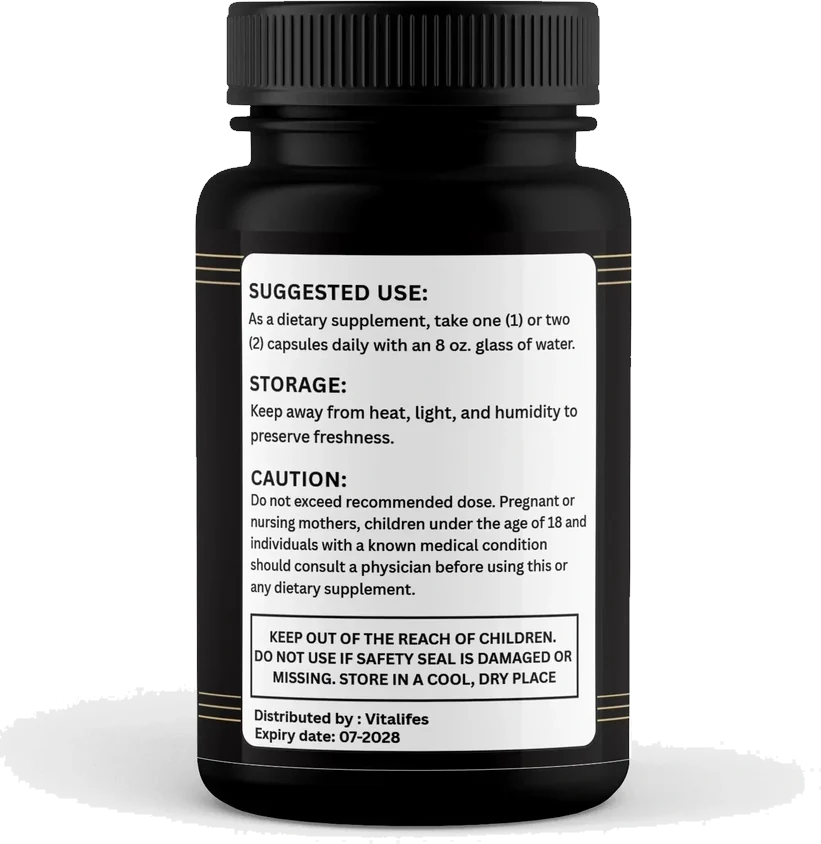
Reading a panel
Why Daily Value is “not established” on botanical panels
Turn a botanical supplement over and the percentage column is blank, with a footnote reading Daily Value not established. It is on almost every panel in this category, and it is not a warning.
A Daily Value is a reference figure set for nutrients with an established intake, and a percentage only means something against one. Nobody has set a reference intake for horny goat weed, tongkat ali, saw palmetto or nettle root, so there is no denominator and no percentage. A label printing that footnote is following the rules rather than hiding behind them.
The consequence still matters. On a vitamin panel the percentage does some of your thinking; on a botanical panel you get milligrams and nothing to measure them against. It is thin for minerals too: the Office of Dietary Supplements says experts have not set a recommended amount of boron.
Reading a panel
Proprietary blends versus a full panel
This is the biggest difference between two panels that otherwise look alike.
A full panel prints an amount beside every ingredient, so you can take one of them, look up whatever research exists, and see whether the amount in front of you is in the same neighbourhood. That is the point of a number on a label.
A proprietary blend prints one total and no split. US rules permit it, provided members are listed in descending order by weight, and that ordering is all you get back: first is biggest, last is smallest. It does not say whether the last is a third of the blend or a dusting, and that gap is the gap between a formula and a decoration.
A large total does not close it. 1200 mg split eight ways is still eight unknowns, and where two of the eight are not botanicals the ordering rule is comparing unlike things. Between an otherwise equal panel and blend, the panel is worth more for a reason you can say in one sentence: you can check it.
Disclosure
Capsule shells and glandular ingredients
Two things get disclosed badly here more often than anything else, and both decide whether somebody can take a product at all.
The capsule shell is an ingredient
A capsule is made of something, usually gelatin, which is animal collagen. It belongs in the other-ingredients line, normally as the last few words on the panel, and that is why it is missed: people read the blend, stop, and never reach the sentence that settles the question. If a box carries a vegetarian seal, that line is where you check it.
Glandular ingredients are animal tissue
Ingredients described as glandular — orchic substance is the common one here — are dried animal tissue. Good disclosure names the animal, the tissue and the processing, and most labels name none of the three. Anyone avoiding animal ingredients has to treat the whole product as animal-derived, and anyone whose restriction depends on the species cannot answer their own question from the label.
The honest section
Where the shelf stops and a clinician starts
There is a boundary running through this category, and it is worth naming plainly.
NIH’s Office of Dietary Supplements records that the FDA warns that some products marketed as dietary supplements to improve exercise and athletic performance might contain inappropriate, unlabeled, or unlawful stimulants, steroids, hormone-like ingredients, controlled substances, prescription medications, or unapproved drugs — and that using these tainted products can cause health problems. NCCIH says the same of the neighbouring shelves: supplements marketed for weight loss, sexual enhancement and bodybuilding may contain prescription drugs not allowed in dietary supplements, or other ingredients not listed on the label.
The FDA publishes a notification list for sexual enhancement and energy products, stating that such products pose a serious health risk and are not guaranteed to work, and that the list covers only a small fraction of the contaminated products on the market. An absence from it is not a clearance.
Then the part a shelf cannot help with. MedlinePlus puts it in two sentences: hormones are your body’s chemical messengers, travelling in your bloodstream to tissues or organs, and too much or too little of a certain hormone can be serious. If what you want to know is a hormone level, that is a blood test and a clinician, not a capsule and a guess.
Questions
SodaPeak FAQ: muscle support guide questions
What is the warning about supplements in this category?
NIH’s Office of Dietary Supplements states that the FDA warns some products marketed as supplements to improve exercise and athletic performance might contain inappropriate, unlabeled or unlawful stimulants, steroids, hormone-like ingredients, controlled substances, prescription medications or unapproved drugs. The FDA also maintains a public notification list for sexual enhancement and energy products. No laboratory report has been published for this product, so neither list can be checked against it.
What does “Daily Value Not Established” mean?
It means no US reference intake exists for these ingredients, so the panel cannot print a percentage. It is a normal line on a herbal label. On this particular panel it is misprinted as “Dally Value Not Established”.
Will it raise my testosterone?
Nothing on this label claims that. The blend is named a Test Boost blend, which points at testosterone, but every printed claim on the bottle is a structure/function claim about muscle, and US law would not allow a hormone claim. NIH’s Office of Dietary Supplements finds no scientific support for the ingredients usually sold on that promise.
Is it FDA approved?
No dietary supplement is. The FDA is not authorised to approve supplements for safety and effectiveness before they are sold. A seal reading “FDA-registered facility” describes a factory’s registration, not this product.
How much of each ingredient is in it?
Not published. “Proprietary Blend” means the manufacturer declares one total instead of eight amounts. US rules allow it, provided the ingredients are listed in descending order by weight - which tells you horny goat weed is the largest share and boron the smallest, and nothing more.
References
Sources for this page
- NIH Office of Dietary Supplements. Dietary Supplements for Exercise and Athletic Performance. ods.od.nih.gov. Accessed September 22, 2026.
- National Center for Complementary and Integrative Health. Using Dietary Supplements Wisely. www.nccih.nih.gov. Accessed September 22, 2026.
- U.S. Food and Drug Administration. Sexual Enhancement and Energy Product Notifications. www.fda.gov. Accessed September 22, 2026.
- MedlinePlus, U.S. National Library of Medicine. Hormones. medlineplus.gov. Accessed September 22, 2026.
- National Center for Complementary and Integrative Health. Herbs at a Glance. www.nccih.nih.gov. Accessed September 22, 2026.
- NIH Office of Dietary Supplements. Botanical Dietary Supplements: Background Information. ods.od.nih.gov. Accessed September 22, 2026.
Next
Keep reading
The seven-step check
Run the same seven checks on any product on this shelf, including this one.
Read it →A panel read line by line
What one real Supplement Facts panel prints, and what it does not.
Read it →Every seal explained
What each mark on a box means, and the one the label itself contradicts.
Read it →Where SodaPeak sits in all of this
SodaPeak is one product on the shelf this guide describes: 60 capsules, a two-capsule serving and a 1200 mg blend of eight named ingredients. Its panel does several things well and contradicts its own packaging twice. Read the ingredient page before the order page.
Price and money-back window on the listing · ships from inside the US · order desk +1 (302) 200-3480